
Sumner County Release Meanings
A Sumner County jail release is an exit from one custody episode. It does not always mean the person walked into the community. The Sumner County Sheriff’s Office may record release on bond, a court order, time served, sentence completion, or another lawful basis. The same system may also record a transfer to the Tennessee Department of Correction, another county, a federal custodian, or immigration authorities. Each event closes or changes the local booking, but only some are community releases.
The official Sumner County inmate list shows current cards. Once a card vanishes, the list no longer answers what happened. A sheriff booking-and-release record ties the exit to the correct inmate ID and booking. A court order can show the legal basis. FOIL follows a felony offender into state custody or community supervision, while VINE can corroborate a status change. These systems answer different questions, so a sound Sumner County release finding uses the channel that owns the event.
- Release
- The jail gives up custody, either to the community or another authority.
- Parole
- Board-approved community release before a sentence expires, with supervision.
- Probation
- A court-ordered community sentence managed under stated conditions.
- Discharge
- The end of custody or supervision recorded by the responsible agency.
Sumner County Release Types
The words on a Sumner County release record matter. Bond and recognizance usually mean the person left jail while the criminal case continued. Time served or sentence expiration describes the end of a custodial term, but another case, hold, probation term, or parole term can still apply. A dismissal or acquittal may support release in one case without defeating an unrelated hold. Transfer is not community release at all.
| Recorded event | Meaning | Next official check |
|---|---|---|
| Bond or recognizance | Local custody ended while the case may continue | Sumner court case and sheriff release record |
| Time served or expiration | The stated custodial portion ended | Court judgment, FOIL, and outstanding holds |
| Probation or parole | Community release with state supervision | FOIL status and TDOC field office |
| Transfer | Another agency received custody | Receiving agency, FOIL, BOP, or ICE |
| Dismissal or acquittal | One case ended without conviction | Court orders plus other hold checks |
| Detainer pickup | A waiting agency assumed custody | The named receiving authority |
A deceased departure is not a release and should never be described as one. Likewise, a hospital move or data correction may make a card disappear without ending legal custody. Read the literal release authority and destination. The record should say whether the person entered the community or merely changed custodians.
Sumner County Release Record Fields
A useful Sumner County release record identifies the episode, event, and authority. The episode prevents a same-name error. The event supplies the actual exit date and, when maintained, time. The authority explains why the sheriff relinquished custody. Ask for the destination or receiving agency when the event may have been a transfer and that field is public.
| Field | What it establishes |
|---|---|
| Full name and date of birth | Identity tied to the booking episode |
| Inmate or booking ID | The exact Sumner County custody record |
| Booking date and charges | The episode and related allegations |
| Case number | The matching court proceeding |
| Actual release date and time | When SCSO relinquished custody |
| Release type or authority | Bond, order, expiration, parole, transfer, or other basis |
| Receiving agency | Where custody moved, if recorded and public |
| Bond and property entries | Supporting facts linked to the close of the booking |
The live roster does not expose these release fields. It shows a name, booking image, inmate ID, race, sex, age, booking time, charges, and bond entries. That makes the card valuable before removal, especially for capturing the inmate ID. It is not a release archive and has no published post-release retention promise.
Request Sumner County Release Records
The SCSO Records Division is the archive path for an episode-specific county release record. Tennessee citizens generally may inspect state and local public records unless an exemption applies. A custodian may ask for proof of state citizenship, charge reasonable copy or labor costs, redact protected facts, or provide a time estimate. No fixed Sumner County fee or production time was verified, so request an estimate before chargeable work.
- Identify the person by full name, date of birth or inmate ID, and booking date.
- Ask for the existing booking-and-release record, not an answer to a broad question.
- Specify actual release date and time, release authority, and receiving agency if public.
- Give a narrow date range and ask for electronic delivery when the record is already electronic.
- Request a written exemption citation for any withheld field and the rest after redaction.
The Tennessee Public Records Act does not force staff to create a custom report that does not exist. For a date window, ask whether SCSO maintains an existing release log or export. Inspection and copies are distinct. Sections 10-7-503 and 10-7-506 set the main access and copy framework.
The official Records Division screen shows the local contact path. Open the SCSO records instructions before sending a request.
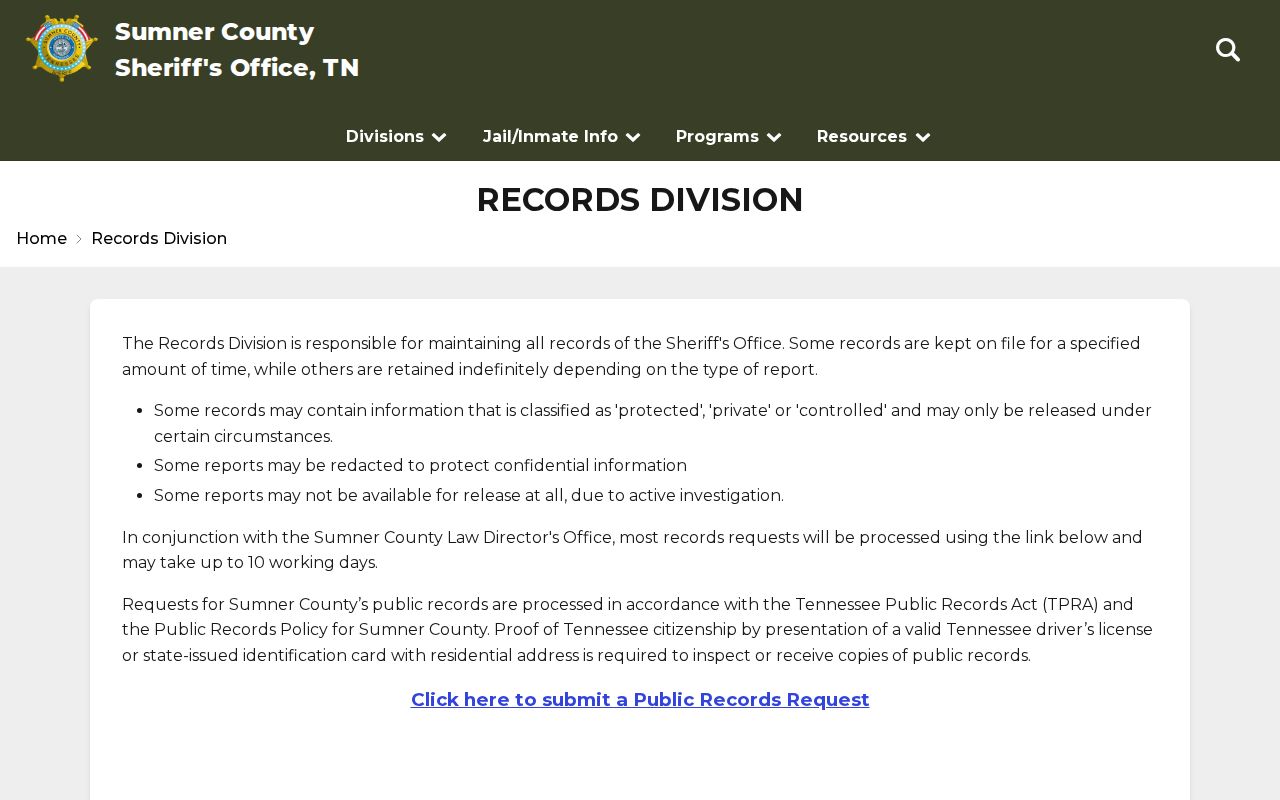
The captured page helps confirm that the request goes to the record custodian rather than a third-party listing.
Note: Removed inmate cards have no published retention period, so preserve the inmate ID and request the underlying episode record.
Sumner County Release Record Limits
The Tennessee Public Records Act is the baseline, but it contains many exemptions and does not override all other laws. Juvenile files have separate confidentiality rules. Medical facts, protected victim information, security material, and active-investigation material may be redacted or withheld under the law that applies. Ask for all segregable, nonexempt parts when one field is protected.
Expunction under Tennessee Code section 40-32-101 can change the public trail. An expunged or sealed Sumner County case may no longer be available through ordinary searches. That does not make a stale cached copy reliable. For a filed judgment or order, use the Circuit Court Clerk. For an old TDOC episode, request the archived offender record from TDOC.
Sumner Release Property Questions
SCSO has a dedicated Property channel in its corrections menu. The published material describes how money held at intake enters a trust account, but it does not state a universal release pickup time, required identification, proxy rule, or deadline. A released person or authorized representative should call the published sheriff number before traveling.
A property acknowledgment may support the fact that a person completed discharge in person. It does not replace the booking-and-release record. If a public release field is wrong, send the creating custodian the inmate or case ID, identify the field, attach the controlling court or agency record, and ask for written confirmation of the correction.
Sumner Release Court Trail
Sumner County has a useful court path after a jail card disappears. General Sessions handles misdemeanor cases and preliminary felony work, while Criminal Court handles felony cases and jury trials. Search both levels when the case path is unclear. The Sumner public case portal can show case identity, docket events, orders, judgment, sentence, probation, and later action, depending on the selected file.
Use a full name and, where available, a case number or birth date to reduce false matches. A docket is a schedule, not a result. A “time served” judgment may explain the authority to release, but it may not give the moment jail staff finished processing. Request the filed order or certified judgment when the online summary is unclear.
The official case-search screen illustrates the local route. Open the clerk-linked Sumner court search and complete its anti-bot step.
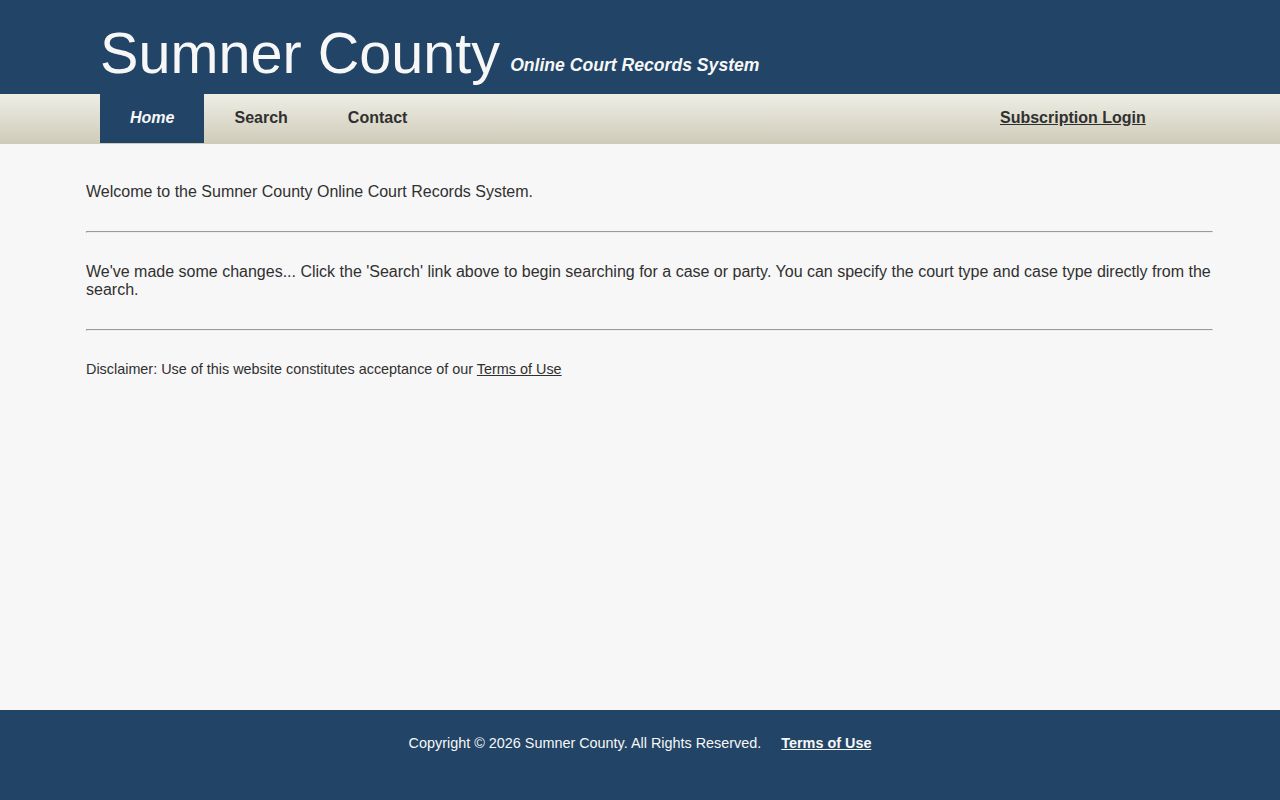
The court record can corroborate legal authority while SCSO remains the source for the physical release event.
Find Sumner County Released Inmates
Begin with one identity and one custody episode. Gather the full legal name, name variants, approximate birth date, inmate ID, booking date, and case number. Then move through official systems in order. The goal is not merely to show that the person vanished from one screen. It is to learn whether that Sumner County release ended in the community, supervision, state custody, or another transfer.
- Check the SCSO current list. Save the inmate ID and booking time if the card remains.
- Ask SCSO whether that booking closed by community release or transfer, then request the release sheet.
- Search the Sumner court case for bond, dismissal, judgment, sentence, probation, or another order.
- Use TDOC FOIL when felony custody, state transfer, parole, or probation is possible.
- Check Tennessee VINE as a status-change and notification layer tied to the reporting agency.
- Use BOP or ICE only when federal or immigration custody fits the episode.
Two independent official sources are best for a recent Sumner County release. Sheriff plus court, sheriff plus VINE, or sheriff plus FOIL can resolve different parts of the event. For older matters, a written agency response and a certified court order are more durable than a web result.
Sumner Released Offender FOIL Search
TDOC’s Felony Offender Information Lookup covers people currently or formerly in state felony custody or supervision. It is not a list of every Sumner County booking. Search by first and last name or TDOC number, use a middle name and birth date to sort common names, and open the details rather than relying on a result snippet.
| FOIL field | How to read it |
|---|---|
| Name and TDOC ID | Match the correct state offender record |
| Photograph and birth information | Help separate people with similar names |
| Status | Incarcerated, parole, probation, or inactive |
| Assigned location | Custodial site or supervision assignment |
| Sentence and offense | State case and sentence context |
| Release information | Displayed state release or sentence dates |
| Parole hearing result | A result field, not proof that physical release occurred |
“Incarcerated” means custody. “Parole” or “probation” means the person is in the community under supervision, not fully discharged. “Inactive” is consistent with former TDOC custody or supervision, but the dates and sentence detail must support the conclusion. A county-only misdemeanor may never appear in FOIL.
TDOC provides the official search form. Open the FOIL search to check a Sumner County state-custody path.
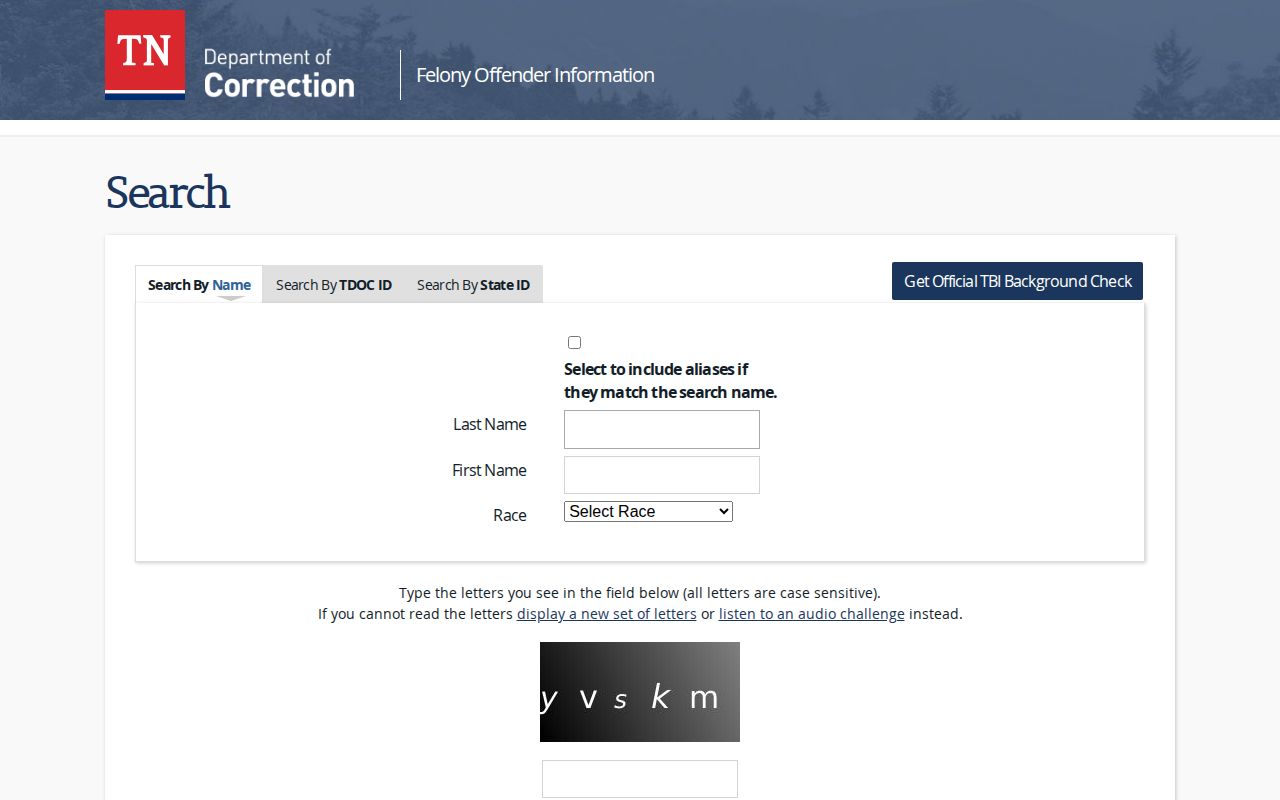
The detail record, not the blank search form, supplies the status and date context needed to interpret a release.
Sumner Recent Release Feed Gap
No official SCSO 24-hour or 72-hour released-inmate feed was identified. The current inmate page has booking cards with names, photos, charges, bonds, and booking times, but it has no release filter, release date, or archive window. Comparing old screenshots and declaring every missing card a release would turn an ambiguous data change into an unsupported claim.
For a same-day or three-day period, ask whether SCSO maintains an existing release log or export for the exact timestamps. Do not require staff to create a new list. For one named person, request the closed booking-and-release sheet and use VINE for a timely alert. FOIL applies only if state felony custody or supervision is involved.
The official roster shows the boundary. View the current Sumner inmate list as a custody check, not a release archive.
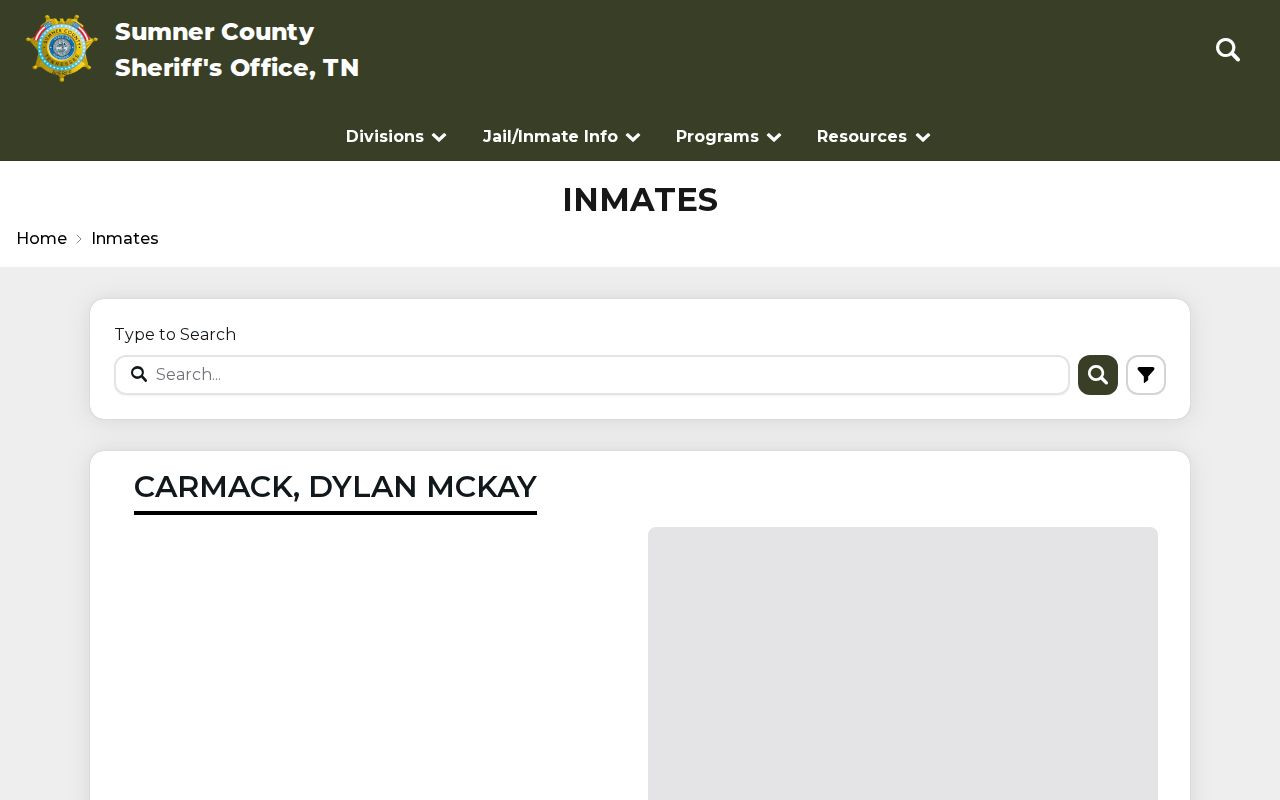
Its visible booking fields help identify an episode, but the absence of release fields requires follow-up with SCSO.
Sumner Post-Release Supervision
Tennessee divides decision and supervision roles. The Board of Parole decides parole matters. TDOC Community Supervision manages people on parole, probation, and related community statuses. FOIL is the public person-level bridge because its status can say parole or probation and its assigned location can help identify the responsible office.
The Sumner District Office is part of District 81, which covers Robertson, Sumner, and Wilson Counties. An office assignment should still be checked in FOIL because a person may report elsewhere or have an interstate placement. An alleged absconder has failed to report or cannot be located. That label is not a release date or new conviction. The fuller verification route appears on the Sumner County Post-Release Supervision page.
Sumner Release Alerts and Transfers
Tennessee VINELink can search one person and register free phone, text, email, or app notifications when offered. Confirm the inmate or offender ID and the reporting agency. A Sumner jail VINE event and a TDOC VINE event may represent two successive stages. The alert is evidence of what the supplier reported, not a full explanation of bond, dismissal, transfer, or sentence discharge.
For federal prison history, the BOP locator may show “Released” and a date for records after 1982. “Not in BOP custody” does not rule out state or immigration custody. ICE’s locator may include adults still detained or released from ICE within its limited recent window. A Sumner County release to an immigration detainer is a transfer, not community freedom. USMS movements also lack a public former-detainee search equal to BOP.
Note: Registry entries serve offense-specific reporting laws and do not prove the date or reason for a Sumner County release.
Sumner Release Search by Custodian
The correct record follows the custodian. A local booking, a TDOC sentence, and a federal or immigration hold can form successive episodes for the same person. A released result from one source may coexist with active custody in the next. Check the agency name and event date every time.
| System | What it can show | Main limit |
|---|---|---|
| SCSO current inmates | A booking displayed in current county custody | No release archive or exit reason |
| SCSO release record | Actual county exit event and authority | Requires a direct request when not online |
| Sumner courts | Bond, disposition, judgment, and orders | May not show physical exit time |
| TDOC FOIL | State custody, parole, probation, inactive status | Not every county booking |
| VINE | Reported status change and alerts | Depends on the supplying agency feed |
| BOP or ICE | Federal custody or recent immigration status | Separate coverage and retention rules |
Juvenile matters are separate. They should not be searched through the adult jail page or treated as a missing adult record. An authorized parent, guardian, or counsel must use the Juvenile Court route within the limits of Tennessee confidentiality law.
Sumner County Release Systems
Sumner County has one central adult county jail, plus separate juvenile, state, federal, and immigration channels. The statewide and federal entries below are custodial networks, not claims that each operates a prison building in Sumner County. Their pages explain how a local release or transfer is verified in the correct system.
- Sumner County Jail handles the main adult local booking and release record.
- Sumner County Juvenile Detention follows a confidential juvenile-court route.
- Tennessee Department of Correction tracks state felony custody and supervision through FOIL.
- Federal Bureau of Prisons tracks federal prisoners and qualifying former federal records.
- ICE Detainee Locator covers a separate civil immigration custody path.
No TDOC or federal prison was identified as physically located in Sumner County. A transfer into one of those systems means the person left the jail but did not necessarily enter the community.
Avoid Sumner Release Payment Scams
SCSO posts a direct warning that it does not seek money by phone, text, email, gift card, wire transfer, or similar means, including claims tied to inmate release. A demand for payment to complete or verify a Sumner County release should be treated as a scam signal. Do not use the caller’s number or link.
Call the sheriff through the number published on the official SCSO site. VINE registration is free. Court costs or bonds belong to the official process and should be checked with the named court or agency through its published channel, not through an unsolicited caller.